
Every homeowner knows the distinct sound of a house in distress. It might be the subtle, hollow thud of a pipe shuttering behind the drywall, the sudden silence of a central air unit cutting out on a ninety-five-degree afternoon, or the persistent drip-drip-drip echoing in a dark attic. These sounds are rarely just minor inconveniences. More often than not, they are the prologues to expensive, stress-inducing home emergencies.
The fundamental truth of property ownership is that maintenance is optional, but repair is mandatory. When you choose to defer routine care, you are not saving money; you are simply taking out a high-interest loan against your future budget. Emergency repairs almost always cost three to four times more than scheduled, preventative maintenance. Emergency service calls carry premium labor rates, parts must be rushed, and the secondary damage—such as warped hardwood floors, ruined drywall, and mold remediation—dwarfs the cost of the original broken component.
Taking control of your home does not require an advanced degree in building science, nor does it mean spending every weekend with a tool belt strapped to your waist. It requires a shift in mindset from reactive panicking to structured, proactive stewardship. By understanding how your home’s major systems age, interact, and fail, you can build a systematic inspection routine that catches minor friction points long before they escalate into structural catastrophes.
Protecting Your First Line of Defense Against Weather
Consider the life of a roof. It bakes under intense solar radiation, freezes during winter thaws, and withstands hundreds of gallons of wind-driven rainwater every year. Because it sits entirely out of sight, it is usually out of mind until water starts staining the living room ceiling. By the time a leak manifests inside your home, wood rot has likely already settled into the roof decking and rafters.
A proactive defense begins twice a year, ideally in late spring and late autumn. Armed with a pair of binoculars, perform a visual sweep from the ground. Look for telltale signs of distress: shingles that are curling at the edges, losing their protective mineral granules, or missing entirely. Pay close attention to the flashing around chimneys, skylights, and vent pipes, as these metal joints expand and contract at different rates than surrounding materials, creating small gaps over time. If you suspect damage or simply want a professional assessment, reaching out to an experienced roofing contractor can help identify micro-tears and failing sealant that aren’t visible from the ground. Specialized materials require specialized knowledge. If your home features heavy slate, clay, or concrete, hiring a qualified tile roofing contractor is essential, as walking improperly on these materials can shatter delicate tiles and create far more damage than the weather ever could.
The roof system does not end at the shingle edge; your gutters and downspouts are equally vital. When gutters clog with leaves and roof grit, water backs up underneath the lower edge of the roofing material, rotting the fascia boards and seeping into the eaves. During winter, standing water in clogged gutters freezes, creating heavy ice dams that pull gutters away from the house and force water backward into the walls. Clear your gutter pathways at least twice a year, and ensure that downspouts extend at least four to five feet away from your foundation wall so water discharges safely.
Knowing When Maintenance Is No Longer Enough
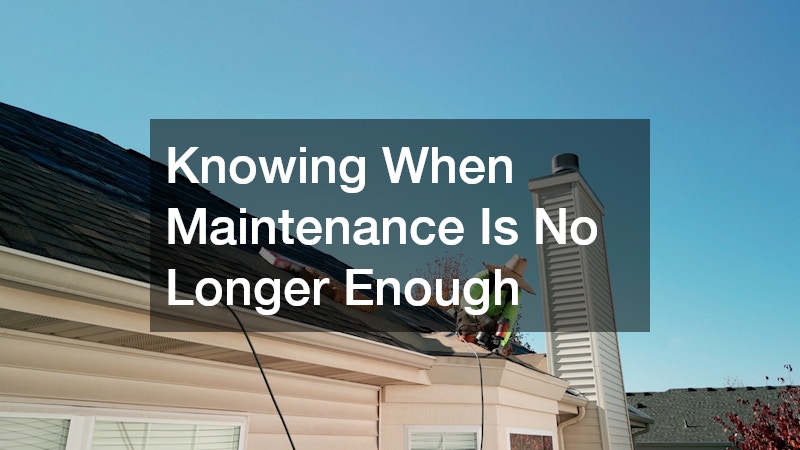
Recognizing the physical signs of structural aging is crucial for long-term planning. Persistent ceiling discoloration, sagging ridge lines, or widespread granule loss accumulating in downspout splash blocks are clear signals that your building materials are breaking down. Track the age of your installation carefully; most standard asphalt surfaces begin to degrade rapidly after fifteen to twenty years, regardless of visual appearance. You must also factor in local climate factors, noting how severe hailstorms, high heat, or heavy snow loads accelerate structural fatigue over time.
There comes a point in the lifespan of every major building component where pouring money into ongoing patches becomes a financial trap. Patching a single leak on an aging structure might buy you six months, but if the underlying underlayment has degraded, you are simply playing a game of whack-a-mole while the risk of interior water damage grows exponentially.
When a major component reaches the end of its functional life, shifting strategy from reactive repair to planned replacement is the smartest financial decision you can make. Booking a scheduled roof replacement during the off-season allows you to secure competitive labor pricing, choose high-performance materials thoughtfully, and avoid the chaotic, inflated costs associated with emergency tarping and rush construction after a catastrophic storm.
Regulating Indoor Climate Systems for Efficiency and Longevity

Heating and cooling systems are the mechanical heart of the home. When they fail, comfort vanishes immediately, and in extreme temperatures, health and safety are quickly compromised. The vast majority of mechanical cooling failures stem not from complex electronic glitches, but from simple, restricted airflow. When dust, pet dander, and debris accumulate on air filters, the system’s blower motor has to work significantly harder to draw air through the return ducts. This added strain increases electrical consumption, overheats components, and causes the cooling coils to freeze into solid blocks of ice that eventually overflow internal drain pans.
To keep these complex systems humming smoothly, follow a rigid maintenance routine:
- Replace or clean return air filters every thirty to ninety days, depending on pet ownership and local air quality.
- Pour a cup of distilled white vinegar down the condensate drain line once every spring to dissolve algae and prevent gelatinous clogs.
- Keep the outdoor condenser unit clear of leaves, high grass, weed-eaters, and stored items to maintain a minimum two-foot clearance for proper heat dispersion.
While basic filter changes fall squarely on the homeowner, mechanical components require professional diagnostic equipment. Partnering with a reliable air conditioning company for an annual spring tune-up ensures that refrigerant levels are precisely balanced, electrical contacts are free of pitting, and fan motors are operating within safe thermal limits. Never ignore small warning signs like unusual squealing noises or unexplained spikes in utility bills. Scheduling prompt HVAC service when these symptoms first appear prevents minor mechanical friction from escalating into complete compressor burnout during the hottest weeks of the summer.
Managing Interior Hazards Across Plumbing and Heating Systems

I remember talking to a homeowner who returned from a weekend getaway to find two inches of standing water across his main floor. The culprit wasn’t a burst water main or a natural flood; it was a slow, neglected line block deep inside the branch piping that had finally backed up through the lowest drain. A problem that would have cost a couple hundred dollars to clear preemptively ended up costing tens of thousands in structural drying, flooring replacement, and lost personal belongings.
Plumbing and heating systems operate quietly behind walls and behind closed doors, making them easy to take for granted until disaster strikes. A proactive approach to interior safety involves establishing regular inspection habits for both water drainage and open-flame heating units. On the supply side of plumbing, check braided steel flex lines regularly, exercise shutoff valves to prevent seizing, and test your home’s water pressure. On the drainage side, install hair catchers in sinks and tubs, use non-caustic biological enzyme treatments, and clear main lines preemptively before full clogs form.
For heating elements, creosote accumulation poses a severe, quiet threat. Every time wood burns, flammable tar-like byproducts condense on the cooler inside walls of the chimney flue. Over time, this layer builds up, and if ignited by intense heat, it causes a roaring chimney fire that can quickly breach the flue lining and set the home’s framing ablaze. Investing in annual fireplace cleaning eliminates this dangerous fuel source, ensuring that smoke and carbon monoxide are safely directed out of the home. Similarly, indoor drainage lines require proactive care rather than harsh chemical quick-fixes. Off-the-shelf caustic drain cleaners might temporarily melt through a hair clog, but they generate intense heat that can warp PVC pipes or corrode older cast iron drains. Utilizing periodic professional drain cleaning uses specialized mechanical augers or high-pressure water jetting to restore pipes to their full inner diameter, washing away tree roots and heavy grease buildup long before a sewage backup ruins your home.
Securing Property Perimeters and Access Points
Step outside and walk around your foundation wall. Water is the undisputed enemy of any foundation, whether your house sits on a raised crawlspace, a basement, or a concrete slab. Poor surface drainage around the perimeter lets water pool directly against concrete footings, saturating the surrounding soil. During freeze-thaw cycles, this saturated earth expands violently, pushing inward on basement walls until they bow and crack. Your lawn irrigation system plays a surprisingly large role in soil moisture balance. Broken or misaligned spray heads often blast water straight against siding, windows, and exposed foundation concrete. Furthermore, hidden underground line leaks soften the soil, causing localized settlement beneath walkways and foundations. Performing a quick monthly test of each irrigation zone allows you to spot broken pop-ups or pressure drops early. Prompt sprinkler repair stops wasted water, prevents soil erosion around your footings, and preserves proper lawn hydration.
The surfaces surrounding your home must act as a watershed, directing rain away from the structure. Concrete and asphalt driveways should be sloped away from the garage, but gravel access ways present a unique challenge. Over time, heavy vehicles compress gravel, creating deep ruts and low spots where rain pools, carving deep channels that funnel runoff straight toward the home’s perimeter. Maintaining a smooth, properly sloped drive requires ongoing care: fill low spots promptly with crushed aggregate rather than topsoil, rake high spots back into wheel ruts to preserve the crown, and contract with a specialized gravel driveway service every few years to spread fresh material, re-establish proper grading, and roll the surface compact so stormwater flows safely into designated drainage ditches.
Finally, consider the garage door, which is often the largest, heaviest moving mechanical object in the entire home. It operates under immense spring tension, lifting hundreds of pounds overhead multiple times a day. Inspect your overhead system quarterly by checking high-tension steel cables for fraying, spraying down rollers and hinges with silicone lubricant, and testing the auto-reverse feature. Modern garage door openers rely on a delicate balance of gear ratios, force limiters, and photo-eye safety sensors. If the motor begins to strain, hum loudly, or jerk intermittently during operation, the drive gear is likely stripping or the springs are out of balance. Servicing these components early ensures smooth, reliable entry and keeps heavy doors operating safely.
Building Your Long-Term Preventative Strategy
The difference between a home that drains your bank account and one that provides safe, secure shelter lies in consistency. Home maintenance is not a chaotic series of unexpected disasters; it is an organized, repeatable cycle of seasonal stewardship. When you break down your property’s needs into small, manageable monthly tasks, the feeling of being overwhelmed evaporates.
Take the time to build a custom maintenance schedule tailored to your property’s specific age, layout, and climate. Document every inspection, note the installation dates of major equipment, and maintain a running folder of warranties and service records. By staying observant and addressing minor wear before it spreads, you protect your hard-earned equity, preserve your sanity, and ensure your home remains a place of comfort rather than a source of stress.